
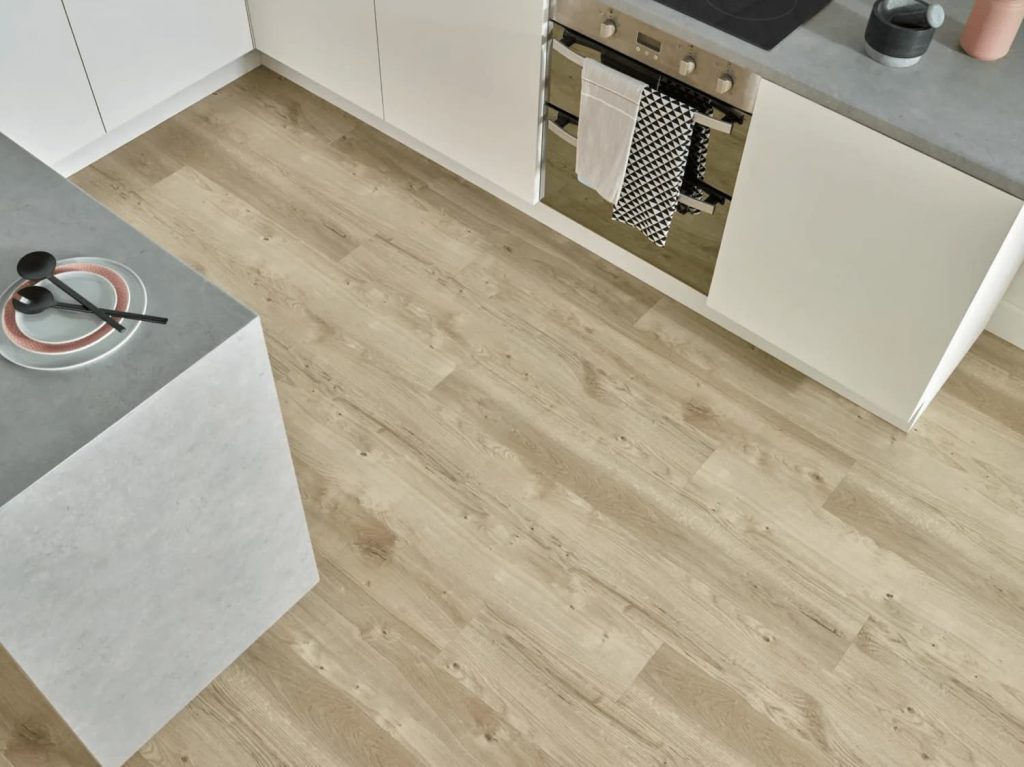
Style tips: Different types of flooring for your kitchen
The kitchen is one of the hardest-working rooms in any home. It’s where families gather in the evening, where cooking creations come to life, and where mess is often left as a result. That means when it comes to choosing your kitchen floor, it can’t just look the part; it has to withstand daily use.
Fortunately, the range of materials, styles and finishes available today make achieving whatever look you have in mind much easier. And without having to sacrifice practicality for style.
We are taking a look at the most popular kitchen flooring types, along with some styling tips to help you make the right choice for your home. The aim is to pick a base which is going to last the test of time and survive the interior trends that come and go.
Luxury Vinyl Tile (LVT)
If there’s one flooring type that has transformed home design in recent years, it’s Luxury Vinyl Tile, or LVT. Its popularity is no exception in the kitchen scene. Waterproof, scratch-resistant, easy to clean and warmer underfoot than natural stone or ceramic tile, it is the ideal base for a busy kitchen.
What makes this option particularly exciting from a design perspective is the quality and variety of modern-day finishes. Advanced printing and embossing techniques can convincingly recreate wood and stone effects, which are near indistinguishable from the real thing.
A warm oak-effect LVT in a herringbone or parquet laying pattern creates the classic farmhouse feel. The pattern adds visual interest to the floor and sits beautifully alongside Shaker-style cabinetry and natural stone worktops. Amtico has collections like Amtico Signature and Amtico Form which offer incredible depth of texture across wood, stone and abstract designs.
For a more contemporary or open-plan kitchen, consider a large-format stone-effect tile in a neutral tone, like soft concrete, warm greige or pale limestone. These finishes are notorious for creating continuity throughout the home as the flooring flows from the kitchen into the dining or living space.
Engineered wood
Solid hardwood has been admired for the character and warmth it brings to a space, but the reality is that it can be unforgiving in a high-moisture environment. Engineered wood is a practical alternative, featuring a wood veneer over a layered core that gives it far greater stability against changes in temperature and humidity.
This is one of the most common choices for underfloor heating. Engineered wood helps with heat distribution and retains the authenticity that many homeowners are after. Artisan Flooring has a range of Engineered Wood that would suit any design.
Pale, bleached, or light-toned engineered woods complement white or pale grey units, minimal clutter and lots of natural light for the Scandi-inspired kitchen. Darker, richer tones like walnut or smoked oak pair beautifully with navy or forest green cabinetry for a kitchen that feels elegant and grounded.
Compared to LVT, engineered wood requires a reasonable level of care around standing water, so it’s best to get into the habit of cleaning around the sink and hob after use.
Laminate
Laminate flooring has come a long way from its early days as a budget compromise. Modern laminate, particularly water-resistant options, offers a convincing wood or stone aesthetic at a more accessible price point. It’s also another suitable match for kitchens that have underfloor heating.
Distressed or textured laminate finishes work brilliantly in an industrial-style kitchen, paired with on-trend features like exposed brick or concrete walls, black metal hardware and open shelving. A smooth light ash or grey laminate can create that clean, modern feel just as well, which is ideal for contemporary kitchens with handleless units and quartz worktops.
One thing to look out for when choosing laminate for a kitchen is the AC rating. This indicates durability, and for a room that is heavily used, an AC4 or AC5-rated board is worth considering.
Stone and ceramic tile
It’s understandable that natural stone and ceramic tiles remain a perennially popular choice for kitchen floors. Porcelain tiles are durable and naturally moisture-resistant, and come in a range of colours, formats and surface textures.
Traditional or country inspired kitchens benefit from the patina that develops overtime on natural stone such as slate, limestone or flagstone. The darkened film adds character and charm to the space. However, natural stone does require sealing and more careful ongoing maintenance than most other flooring types.
Large-format porcelain tiles (anything from 60x60cm upwards) can make a smaller kitchen feel more spacious. Fewer grout lines mean less visual interruption across the floor. For a bold statement, a black-and-white chequerboard tile is a timeless choice that works across traditional, retro and modern kitchen styles.
If you like the look of stone but don’t want the high maintenance or costs, stone-effect LVT from brands like Amtico has a similar result without the cold under footing.
Vinyl sheet flooring
Sheet vinyl often flies under the radar in kitchen flooring conversations, but it is still a practical option. Sold in rolls with no joins, it creates a fully sealed surface that is completely waterproof and resistant to the kind of daily wear that a kitchen floor is subjected to.
Modern vinyl sheet flooring is worlds apart from what it used to be. Today’s designs replicate stone, wood and decorative tile patterns with skill and finesse that suit busy households with young children or pets.
Patterned vinyl, including traditional encaustic tile design or a classic parquet-effect print, can bring personality to a kitchen without a significant outlay. It’s one of the most effective ways of introducing pattern and colour into a space without committing to a wholesale redesign.
A few considerations
By this point there might be a direction you’re leaning, but there are a few questions to ask before finalising your decision.
Do you have underfloor heating? Most LVT, laminate and engineered wood options are compatible, but always check the manufacturer’s guidance before committing. We can also confirm whether it is safe or not.
How busy is your kitchen? A family kitchen with young children and pets has very different demands to a quieter household. In this case, durability and ease of cleaning should sit near the top of your priorities.
What’s the rest of your ground floor like? If you’re after a seamless flow between your kitchen and adjacent living or dining areas, think about how your chosen flooring will transition between spaces in terms of colour tone and floor height.
How much natural light does the room get? Lighter floors can help to open up a north-facing kitchen, while darker tones tend to look their best in well-lit spaces where they won’t make the room feel smaller or heavier.
Flooring at your fingertips
Our showroom in Mere Green has a range of flooring types from industry leading brands, which have been carefully chosen to offer something for every taste and every room in the home. Whether you’re working from a clear brief or just beginning to explore your options, our team of fitters are here to work through the options and find the flooring that’s right for you. Pop in for a chat and feel free to take home samples to see how they look in your own light.